The founder box
Thinking inside boxes
For the entirety of my life up until a year ago, I put myself in a box. A metaphorical box, categorized by my skills, interests and epistemic scope. This was entirely self-imposed, but I suppose clinging onto identity is only human. Let’s call this the “programmer box”. The term is somewhat lossy but it serves the purpose here. The content I consumed, the people I interacted with, the culture that I found myself steeped in.
The programmer box is tight. It’s well-bounded and there are clear membership criterea. You write code, you’re good at it, and there are legible, well-defined steps to get better at it. Understanding, nay, grokking computer systems and building an intuition for it is a tractable process.
When we began Tangled, I firmly held my position within the programmer box. For many months we just wrote code and architected parts of the larger system. And then the more … unbounded stuff began to creep in. I was now responsible for figuring out (at varying levels of depth) accounting and finance, Finnish corporate law, talking to investors, and so much more. I was now a “founder”, and the anchors of knowing what I know, knowing what I don’t and knowing how to get better were all simultaneously lifted.
The founder box is loose. The membership criterea doesn’t really exist, and unlike the programmer (or any vertical for that matter) identity which is earned (to some extent anyway), being a founder feels a lot more provisional, self-declared. There’s culture but everything else is uncharted.
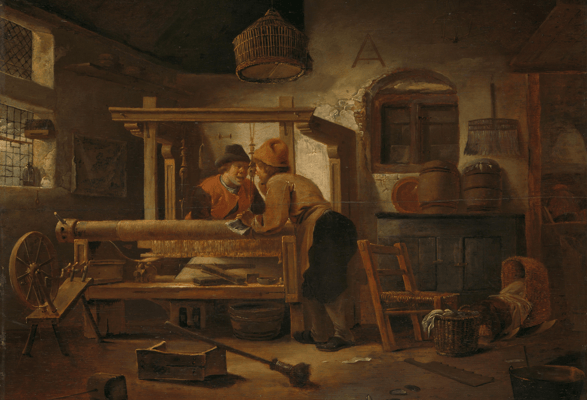
Consider companies of the 19th and early 20th centuries. Founding a business back then was largely an extension of knowing a thing: your trade. You were perhaps a blacksmith, a mill operator, or sold a good. Most knowledge was inherited vertically, i.e. passed down through apprenticeship or family. The systems around you were slow moving enough that the peripheral knowledge likely wasn’t all that much.
Founders today are born into a more multi-faceted and interconnected system; the peripheral knowledge required is significantly more. The modern founder’s epistemic scope is exhaustingly large even to just reason about their companies. For example, a hiring decision is legal, financial, and cultural decision. And none of this is inherited—founders must construct a working model of this system as they navigate its nuances. Importantly, this system is irreducibly ambigious with no clear path toward mastery—unlike programming or whatever else.
I suspect that this expansion of epistemic scope from whatever prior boxes is responsible for the ever so visible “techbro hubris”. I kinda get it: you have to rapidly assemble fluency in a whole new set of domains that you previously had nothing to do with, and this assembly can sometimes feel like mastery. I know it did for me. Some of it is most certainly performative but it’s a function of the system—showcasing intellectual breadth gets you forward. The market selects for this hubris—VCs pattern-match on this behavior as it reads as conviction and vision (and they subseqently mirror this behavior).
I know that there’s no going back now—the founder box is as exhilarating as it is indeterminate. The edges are gone, and I’ve stopped looking for them.